


What to Expect When Volunteering at Events
Common questions answered.
One of the most common questions we hear is: “What does a shift actually look like?” It is natural to feel a bit of “time anxiety” when looking for a new way to give back. At St Andrew’s First Aid, we have designed our volunteering to be as low-friction as possible, ensuring that helping out fits into your life rather than taking it over. We replace uncertainty with clarity so there are no surprises; you are always supported.
Life is busy, and we understand that flexibility is usually the top priority. With St Andrew’s, you choose when you are available.
While you have total flexibility on a week-to-week basis, we do ask that our volunteers make a certain level of commitment to keep their skills sharp. Our ambition is for each volunteer to contribute around 60 hours per year. This averages out to roughly five hours a month, about the length of one football match day or a local event shift.
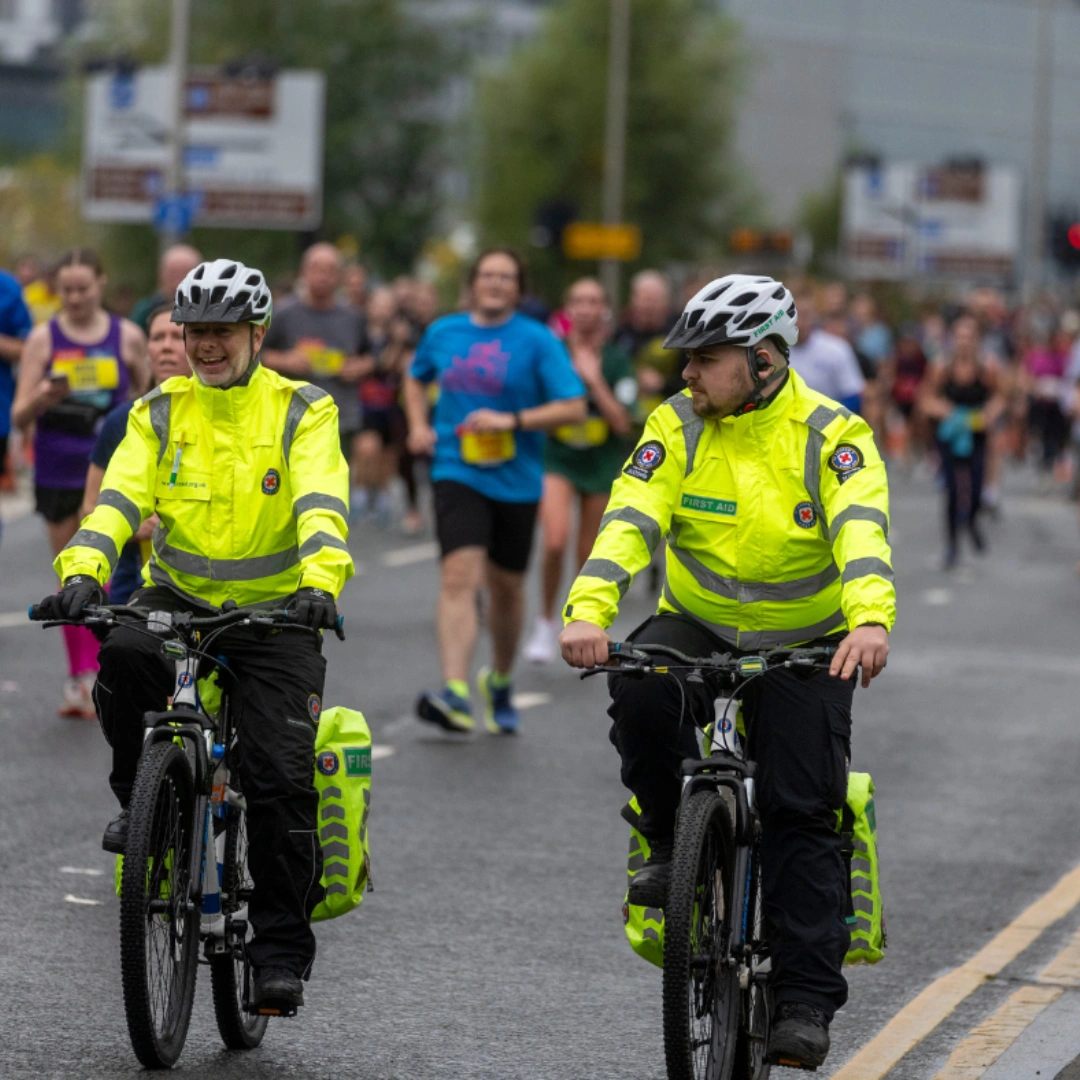
What a Typical Event Shift Looks Like
To remove the “fear of the unknown,” here is a look at a day in the life of a volunteer.
Before the Event
You will never be expected to just “figure it out”. Every shift begins with a team briefing led by an experienced Lead Volunteer. You will receive clear instructions on your role, learn the site layout, and have plenty of time to ask questions before the event begins.
During the Event
You will work in a team , either at a fixed first aid post or as part of a roaming team. Your role is to be a friendly, reassuring presence, supporting the public and communicating with your team members. You are never acting in isolation; help is always a radio call away.
After the Event
Once the event concludes, the team gathers for a brief debrief. Most volunteers leave with a genuine feeling of completion and pride, knowing they helped the community enjoy their day safely.
What Volunteers Actually Do (And Don’t Do)
We want to remove any fear of over-responsibility by being clear about your role.
Tasks You May Do
- Offering reassurance: Being a calm face for someone who is feeling unwell or overwhelmed.
- Providing basic first aid: Using your training to help with minor issues like minor scrapes or heat exhaustion.
- Directing people to help: Guiding attendees to the right resources or medical points.
Things You’ll Never Be Asked to Do
We provide explicit reassurance to keep you safe and comfortable:
- No tasks outside training: You will never be asked to perform a task you haven’t been trained for.
- No working alone: You will always work in teams, never in isolation.
Support Is Always Available
Your confidence comes from knowing you have a safety net.
Team Support at Events
Lead volunteers are present at events to provide direction. We use radios for instant communication, ensuring clear escalation routes are always open if you need a second opinion or extra help.
Support Beyond Events
Our commitment to you continues outside of shifts. We offer ongoing guidance, regular training refreshers, and check-ins to ensure you feel happy and confident in your role alongside other St Andrew’s First Aid volunteers.
What You Need to Bring (And What We Provide)
We make it easy to get started by providing the essentials.
What’s Provided
- Full Training: Practical and supportive learning from day one.
- Uniform: Your official St Andrew’s First Aid kit.
- Equipment: All the tools you need to support the public safely.
What You Bring
- Comfortable footwear: Essential for roaming event sites.
- Willingness to learn: An open mind to develop new life skills.
Your time: Only the hours you choose to give.
Ready to Explore Volunteering?
Your community is waiting for people like you. Take a small step today that could make a massive difference tomorrow with St Andrew’s First Aid.